The Puck · May 2026
The Puck Newsletter: May 2026
Jim Baer shares an excerpt from The Long Postponement: Debt, Democracy, and the Bill That Always Comes Due, a forthcoming book about fiscal honesty, debt, democracy, and the hard choices a country postpones.
The Puck Newsletter · May 2026
The Long Postponement
This month I'm doing something different. Most issues of The Puck are about what's happening in the credit markets, the venture world, or the wider machinery of restructuring. This one is about something I've been working on quietly for the better part of two years: a book.
The working title is The Long Postponement: Debt, Democracy, and the Bill That Always Comes Due. I'd like you, Puck Newsletter readers, to be the first to read it. You've heard me circle these themes for a while. Enjoy.
The following is excerpted from The Long Postponement: Debt, Democracy, and the Bill That Always Comes Due by Jim Baer. Copyright © 2026. All rights reserved.
Debt, Discipline, And Capacity
A society can use debt the way a body uses food.
Eat with discipline, and food becomes strength. You run farther, work harder, build more. You acquire capacity you did not previously have.
Eat without discipline, and food becomes fat. You feel full, even comfortable. You move slower, tire faster, and one day discover that the easy years have left you unable to do what the moment now requires.
Debt works the same way. Used honestly, it builds productivity, infrastructure, and resilience. It carries a country through wars it must fight and crises it cannot foresee. It funds the railroad, the highway, the vaccine, the recovery. That kind of debt creates capacity. It compounds the future.
Used dishonestly, debt becomes the shortcut around the hard decisions a society would otherwise have to make. It funds promises no one wants to end and entitlements no one wants to pay for as they go. It permits a generation to consume the wealth of the next without ever taking a vote that calls the transaction what it is. That kind of debt does not build capacity. It hides the bill.
The book is about which kind of debt America has been accumulating, and what happens when a country forgets the difference.
The Candy Problem
The harder version of the question is constitutional. A democracy gives power to its voters. Voters, given the choice, will tend to vote for benefits now and bills later. They will, in the language of every parent who has ever said no to a four-year-old, vote to eat candy.
The accumulated effect of seventy years of that voting pattern is the system we now inhabit: the long postponement of fiscal honesty, the ritualized refusal to align what we want with what we are willing to pay for.
This is not an indictment of democracy. Democracies are still the best machinery humans have invented for arbitrating disagreement and protecting freedom. It is an indictment of a particular generation's willingness to outsource its hard choices to its grandchildren, and a warning that democracies that never confront their own appetites do not survive their own success.
There Are Only Three Doors
There is no fourth option. When a sovereign accumulates debt beyond what it can carry, there are exactly three exits.
| Door | What it means | The problem |
|---|---|---|
| Austerity | Higher taxes, lower spending, broken promises, political pain. | Democracies are famously bad at this. |
| Growth | The economy outruns the debt. | Historically possible, but betting the entire fiscal future of a mature democracy on unprecedented productivity-driven growth is hope, not a financing strategy. |
| Inflation | The quiet option: purchasing-power erosion and the slow transfer of wealth from savers to debtors. | It is a partial default disguised as policy, and it is corrosive to the middle class. |
If you accept that austerity is politically unlikely and that growth is uncertain even on optimistic projections, the math points to door three. Investors are already repositioning accordingly. The book's contention is that ordinary citizens should understand what that means for them.
Why I Wrote It
I am not an academic economist. I am not a political ideologue. I run CMBG Advisors, a restructuring firm. Before that I was a corporate lawyer at Gibson Dunn. I have spent my professional life inside the machinery of debt: drafting it, negotiating it, scaling it, restructuring it, and, more often than anyone likes to admit, cleaning up after it when the assumptions beneath it failed.
The book is written from that vantage point. From inside the room when the loan goes bad. From across the table when optimism gives way to arithmetic. From the moments when confidence evaporates because trust has been quietly consumed.
There are excellent macro books on debt. Ray Dalio has written some of them. They look at the system from the top of the tower and pattern-match across centuries. The book I have tried to write looks at the same system from the floor of the building, where the patterns are not abstractions but consequences. Where covenants disappear before crises arrive. Where households don't fail because the model says they should; they fail because the variable rate reset.
I have personally lived that. In my early thirties I bought an apartment building with variable-rate debt. The rate reset. The numbers stopped working. I lost the property. My grandfather, Basil Kaufmann, who lived through the Depression and ran his own loan company in St. Joseph, Missouri, had warned me about exactly this. I dismissed his warning at the time. I have spent the years since not making that mistake again, and watching, in real time, an entire country make a version of it at scale.
The Shape Of The Book
| Part | Focus |
|---|---|
| Part I | The moral architecture of debt: Joseph in Egypt, the Jubilee, Stephen Covey's Law of the Farm, and the older intuitions about surplus, scarcity, and time. |
| Part II | The long postponement: Hamilton through Clinton's PAYGO, the missed Obama window, and Bernanke. |
| Part III | The credit system unmasked: shadow finance, the household balance sheet, and AI as the current generation's narrative collateral for leverage. |
| Part IV | When systems lose slack: what discipline actually looks like when it works, California as the case study running in real time, and what happens when persuasion replaces math. |
| Part V | Restructuring a civilization: how debt reshapes power, what an honest national reckoning would require, and what each of us can do as household, operator, investor, and citizen. |
The Long Way Is The Short Way
If there is a single sentence that holds the book together, it is that one. Farmers know it. Entrepreneurs eventually learn it. Reformed alcoholics live by it. The diet that works is the boring one. The marriage that lasts is the one in which both parties keep showing up after the romance turns into routine. The career that compounds is built on a thousand decisions to do the harder thing today rather than the easier thing today.
Short-term pain produces long-term benefit. Short-term comfort produces long-term cost. There are exceptions, but they are exceptions, and a society that organizes itself around the exceptions ends up bankrupt in every sense of the word.
That sentence applies at every scale. The household balance sheet, the corporate balance sheet, the sovereign balance sheet, the cultural balance sheet: each one ultimately reflects whether the people running it were willing to choose the harder thing today in exchange for the better thing later. The long postponement is the consequence of a country that, for most of two generations, chose the other way.
What Comes Next
I am working through the final revisions now. The manuscript is roughly 84,000 words across the five parts described above, with a new closing chapter, "What You Can Do," that turns the diagnosis into something practical for the reader.
I'll have more to say about the publication path in the issues to come. For now, this is the first time I have shared the shape of the argument with this list, and I wanted you to see it in something close to the form it appears on the page.
The country will, eventually, return to the math. The only question, the only question this book has insisted matters, is whether we choose to return now, while the choice is still ours to make, or wait until the choice is made for us.
The long way is the short way.
Catch Up On Past Episodes
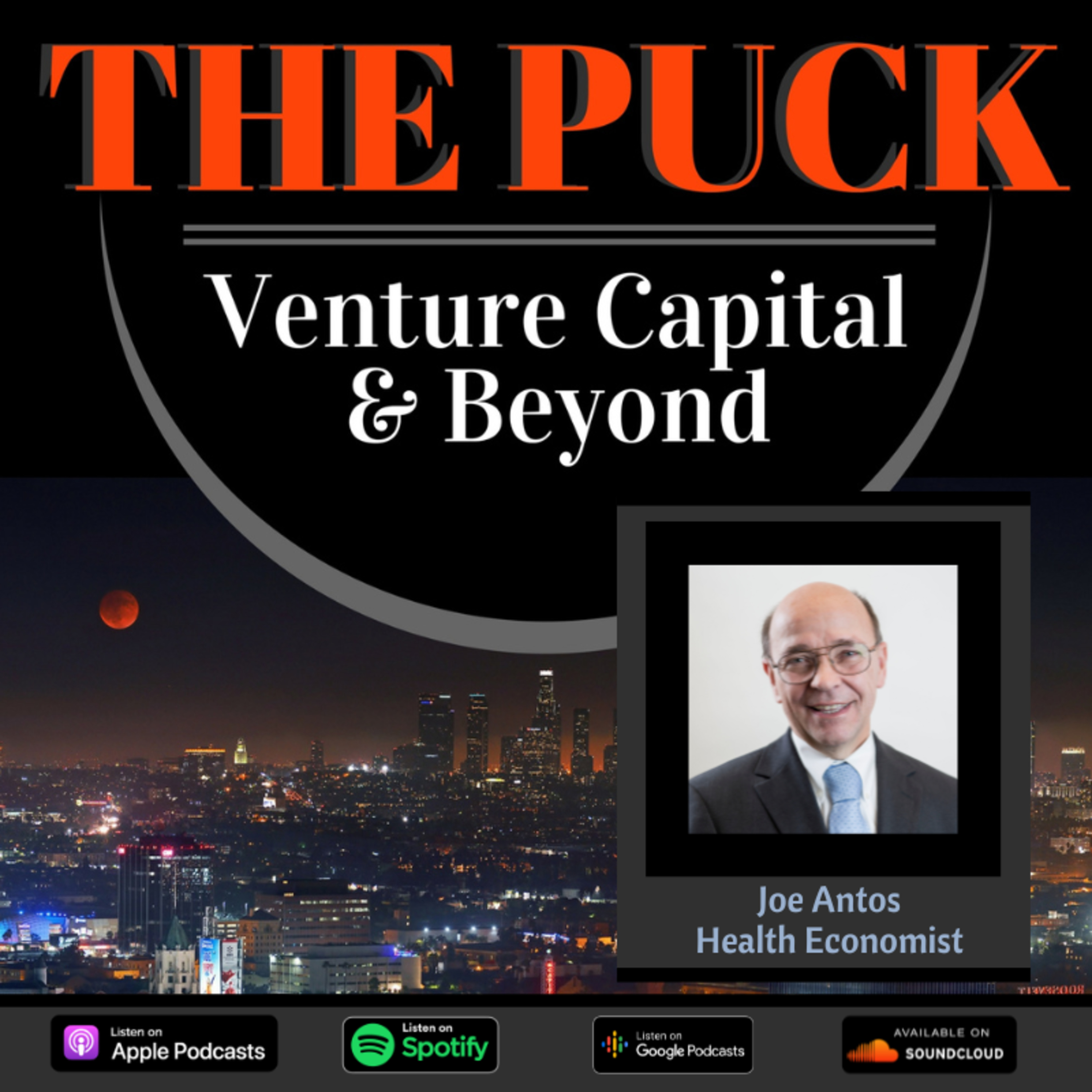
Joe Antos
America's healthcare debate has been stuck for decades, framed as a political fight between left and right. Jim talks with economist Joe Antos about the tradeoffs underneath the system.

Joseph Tainter
Jim speaks with anthropologist and historian Joseph Tainter about complexity, energy, debt, and the fragility of modern civilization.
We Can Always Do More
This month The Puck is highlighting Direct Relief.
Direct Relief is a humanitarian organization, active in all 50 states and more than 80 countries, with a mission to improve the health and lives of people affected by poverty or emergencies. Nongovernmental, nonsectarian, and not-for-profit, Direct Relief assists people and communities without regard to politics, religion, ethnic identities, or ability to pay.
Direct Relief's assistance programs focus on emergency preparedness, disaster response, and the prevention and treatment of disease. The organization tailors its work to the circumstances and needs of the world's most at-risk populations, and follows a policy of transparency in its operations.
Direct Relief is a 501(c)(3) organization.
← Newer Issue · June 2026
The Puck Newsletter: June 2026
Older Issue · Apr 10, 2026 →
The Puck Newsletter: April 2026
Subscribe to The Puck
Get The Puck in your inbox
Monthly notes from Jim Baer on venture capital, restructuring, and the operating realities behind fast-changing markets.