





Executive Summary
Organization in the first 48 hours is not an administrative preference—it is asset protection.
Guide Section
The Work Begins Before Arrival
An Assignment for the Benefit of Creditors (ABC) is, at its core, a transfer of control over the company’s assigned assets. Once the assignor executes the assignment documents, responsibility for protecting, preserving, and administering those assets shifts to the assignee—and the clock starts immediately.
What happens in those first hours, and the first few days, largely determines how well the entire wind-down proceeds. From alarm codes and leased equipment to biohazard waste and angry customers blocking the front gate, the range of issues that surface is wider than most people anticipate. This is a practitioner’s account of what we actually encounter—and how we handle it.
The first site visit should not begin at the front door. Before arriving, we try to identify what could disappear, expire, shut down, spoil, be repossessed, or become inaccessible before the end of the day. We request executed assignment documents, facility and storage addresses, employee and landlord contacts, alarm information, utility status, insurance policies, bank and merchant-account information, known litigation holds, hazardous-material disclosures, and a preliminary list of assets believed to be off-site.
We also identify the people whose cooperation may be essential: the bookkeeper who understands the accounts, the IT administrator who controls the passwords, the warehouse manager who knows where property is stored, and the facilities employee who knows how specialized equipment can be shut down safely. The information is rarely complete, but even a partial briefing allows us to arrive with priorities instead of assumptions.
First-response field map
Three connected preservation tracks
These run in parallel. Site conditions, safety, and counsel’s instructions determine the actual order.
Property & access
- At risk
- Unsecured premises, unidentified equipment, off-site property
- Preserve
- Establish authorized access; document assets and ownership
- Supports
- A reliable starting inventory
Records & systems
- At risk
- Lost passwords, interrupted hosting, erased devices
- Preserve
- Preserve records and backups before irreversible changes
- Supports
- Evidence and information for administration and a possible sale
Cash & continuity
- At risk
- Untracked receipts, automatic debits, essential services stopping
- Preserve
- Map payment channels and coordinate necessary services
- Supports
- Visibility into cash and the cost of preserving value
Guide Section
1. Securing the Premises

The first order of business is physical control. That means understanding who has access and immediately limiting it to authorized personnel.
Safety Before Inventory
Before anyone begins moving through the facility or counting assets, we assess whether the premises are safe to enter. A distressed business may have lost electricity, fire-alarm monitoring, security coverage, refrigeration, ventilation, or other essential services. We look for leaking containers, unstable storage racks, blocked exits, exposed electrical hazards, compressed-gas cylinders, dark warehouse areas, water intrusion, and machinery that may still be energized. When a condition is outside our expertise, we secure the area and bring in the appropriate professional.
From the field: Specialized facilities can present risks that are not obvious during an ordinary walkthrough. We have encountered industrial gases, laboratory materials, clean-room equipment, and chemicals that could not simply be switched off, moved, or discarded. The first question was not what the equipment might sell for—it was what had to remain operational, what could be safely shut down, and who was qualified to handle the materials.
Establishing Authority on Site
We arrive with copies of the executed assignment documents, identification, counsel’s contact information, and a clear explanation of our role. Building security, landlords, storage operators, employees, and vendors may not understand what an ABC is or why the former management team no longer controls the assigned assets. We identify the person responsible for the premises, document who was notified, and resolve questions about access or authority before property is moved or released.
From the field: We have arrived where security personnel had no advance notice and were instructed not to allow anyone inside. Presenting the documents, identifying the decision-maker, contacting counsel or property management, and maintaining a clear written record usually resolves the issue more effectively than forceful demands. The first challenge is sometimes not locating the assets—it is establishing who is now authorized to make decisions about them.
Alarm Systems, Locks, and Keys
Every business has an alarm—and on day one, you often do not know the code, the monitoring company, or whether the system is active. We inventory alarm panels, collect posted instructions, contact the monitoring company to transfer authority, and avoid both false police responses and continued access by former employees.
We change locks on exterior doors as one of the first physical acts on-site. Keys, fobs, and access cards for offices, warehouses, vehicles, and equipment are collected and logged systematically.
From the field: At one engagement, the landlord changed the locks overnight, apparently hoping to exercise self-help over unpaid rent. We explained that the assigned assets were under the assignee’s control and that interference could create legal exposure. Once the parties’ rights and responsibilities were clarified, access was restored within hours.
Landlord Coordination
The landlord relationship requires immediate attention, especially where rent arrears exist. We contact the landlord or property manager on day one, introduce ourselves, explain the assignment, clarify our authority, and begin a dialogue about access rights and lease obligations. Landlords have their own interests, but an organized wind-down is usually more likely to preserve their property and produce some recovery than an uncontrolled collapse. We do not allow anxiety to become self-help; we enforce the assignee’s rights professionally.
Guide Section
2. Asset Inventory—The Foundation of Everything

You cannot administer what you have not identified. An asset inventory is not a courtesy—it is the practitioner’s primary legal and professional obligation.
Documenting the Starting Point
Before equipment is moved, customer property is returned, or vendors enter the facility, we create a “time zero” photographic and video record. We document entrances, locks, rooms, storage areas, inventory, vehicles, serial-number plates, utility meters, visible damage, and significant assets. This record establishes what was present when the assignee took control and provides evidence if questions later arise.
Physical Assets and Ownership
Every tangible asset is logged with an identifying description, serial number or VIN where applicable, location, estimated condition, purchase date and original cost when available, and whether it is owned, leased, or encumbered. This becomes the estate’s master asset register and drives marketing, valuation, auction planning, and creditor reporting.
Possession does not prove ownership. Equipment may be leased or financed, inventory held on consignment, and tools or computers owned by employees, customers, landlords, or secured creditors. We compare the physical inventory with purchase records, leases, UCC filings, loan documents, serial-number schedules, and employee knowledge before deciding how an asset can be handled or marketed.
From the field: Facilities that appeared to contain substantial equipment value have turned out to hold mostly leased, financed, customer-owned, or encumbered property. What matters is the value the assignee can legally control and realize after ownership claims, liens, removal costs, and other expenses.
Leased Equipment and Operational Status
Leased equipment is not estate property, but it must be managed carefully. We identify copiers, forklifts, postage meters, phone systems, beverage equipment, IT hardware, and other leased items; review the agreements; notify lessors; and arrange orderly return or buyout discussions.
Identifying a machine is not the same as determining whether it works. Specialized equipment may be a prototype, unfinished unit, demonstration model, or source of spare parts. We locate qualified people who can safely demonstrate it and determine whether software, components, maintenance records, manuals, tooling, and accessories are present.
From the field: Several machines at one facility appeared complete but were later identified as prototypes, non-operational units, or parts sources. A knowledgeable technician’s walkthrough was as important as the physical inventory itself.
Vehicles and Assets Beyond the Main Facility
For vehicles, we collect keys, titles, and insurance records; immediately verify coverage; notify secured creditors; and prohibit driving without authorization and insurance.
The address in the assignment documents is rarely the complete asset map. We ask about storage units, third-party warehouses, contract manufacturers, trade-show equipment, demonstration units, vehicles, shipping containers, repair facilities, and company property taken home. Leases, credit-card charges, shipping records, insurance schedules, and employee interviews often reveal locations missing from the initial list.
From the field: In one engagement, off-site assets were approaching a lien-sale deadline and surfaced only through recurring storage payments and former employees. The team had to quickly determine whether their value justified paying the charges to stop the sale.
Guide Section
3. Records—Paper, Digital, and Everything In Between
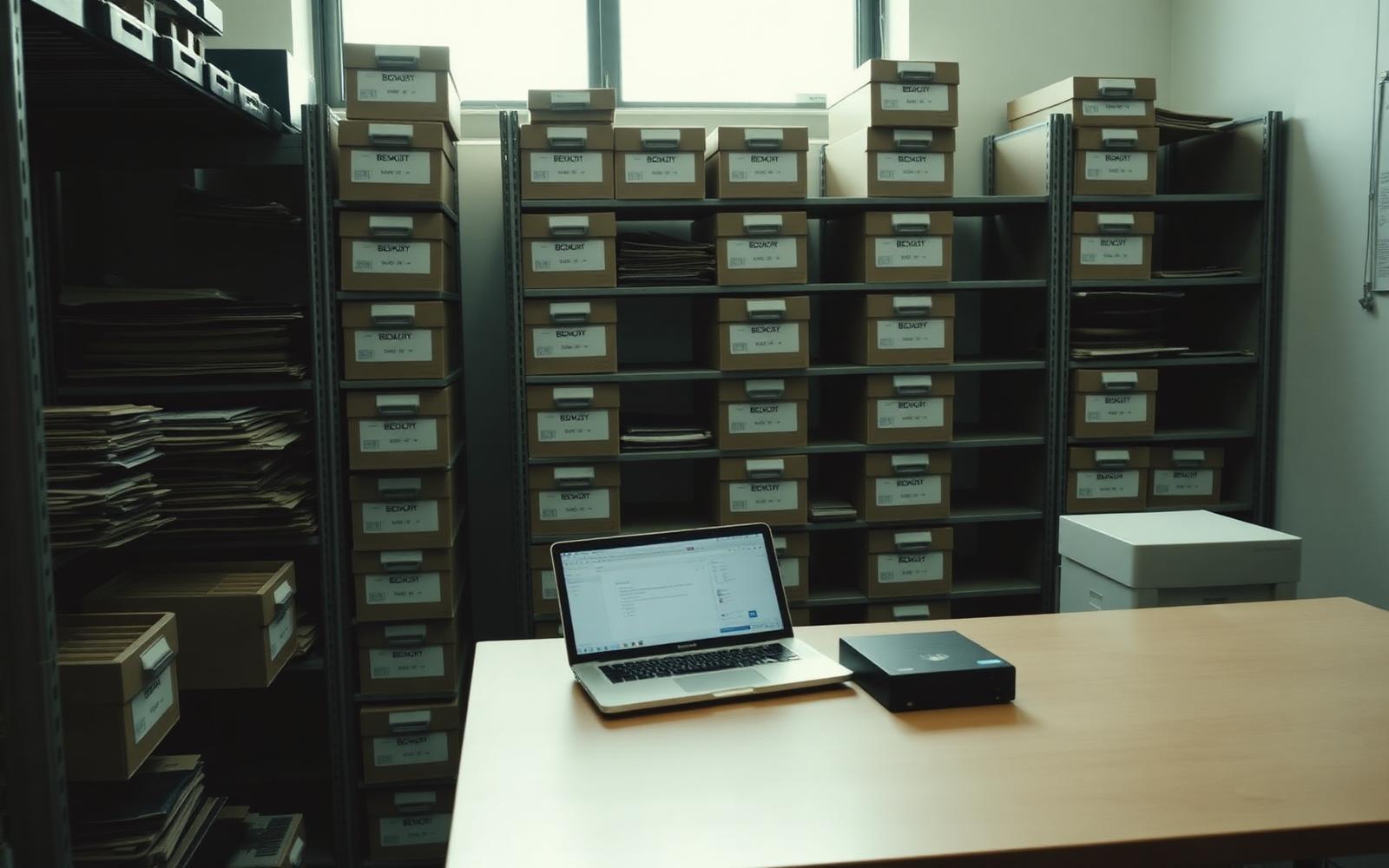
Most businesses are a hybrid of digital and paper records. Some have meticulous cloud systems; others have file rooms full of banker boxes and nobody who knows what is in them.
Financial Records and Following the Money
Bank statements, tax returns, general ledgers, receivable and payable aging reports, payroll records, contracts, and vendor agreements are protected without exception. They are needed to wind down operations, close tax obligations, comply with labor law, analyze claims and transfers, and report to creditors. We do not allow them to be removed, destroyed, or altered.
We also determine where money is still moving. Payments may arrive through lockboxes, checks, wires, card processors, PayPal, Stripe, Shopify, Amazon, or other platforms while automatic withdrawals continue paying vendors, software, utilities, insurance, and company cards. We identify each channel and coordinate before funds are redirected or payments stopped.
From the field: A closed office can look inactive while transactions continue electronically. If payment channels are not identified quickly, funds may be misdirected, essential services interrupted, or scarce cash spent on services that no longer preserve value.
HR, Paper, Digital, and Retention
Personnel files, benefits records, I-9 forms, and payroll data are segregated, secured, and handled with appropriate confidentiality. They may be needed for final payroll, unemployment claims, and WARN Act compliance.
We inventory paper and digital records. Paper is secured on-site or moved to controlled storage. Digital information may reside in accounting systems, CRMs, shared drives, email servers, and cloud platforms.
Retention requirements vary by record and by applicable tax, employment, corporate, environmental, insurance, and privacy law. Litigation, inquiries, contracts, or counsel’s instructions may require longer preservation. We establish a written protocol with counsel and accounting and tax professionals so nothing is destroyed prematurely.
From The Puck · Newsletter excerpt
“Strong cash flows are regaining negotiating power.”
Connection to this guide
That observation concerns credit markets. At the site level, the guide’s immediate task is more concrete: preserve the records and payment channels needed to understand where cash is still moving.
Guide Section
4. IT Systems—Data, Devices, and Decisions
Technology is one of the most complex areas of an ABC administration because decisions made in the first few days have lasting consequences.
Hardware and Intangible Assets
Laptops, desktops, servers, point-of-sale terminals, tablets, and phones are tagged, described, and recorded by serial number. We determine which are owned, leased, or employee-owned.
Not every valuable asset is visible. We identify patents, trademarks, domains, source code, customer lists, proprietary data, formulas, designs, regulatory submissions, social accounts, licenses, and trade secrets; where each is maintained; who controls access; whether renewals are approaching; and what restrictions may affect transfer or sale.
Backup Before Wipe
Before wiping any device, we ask whether it contains records required for administration or litigation; valuable accounting, customer, or IP data; information subject to a litigation hold; or systems a likely buyer would want intact. The general protocol is to image servers and back up key systems before irreversible action. Wiping happens only after no further use or production is required.
Access, Passwords, and Controlled Shutdowns
With cooperative IT staff or contractors, we document cloud, banking, vendor, payroll, and email access; change administrative credentials; securely record them; and promptly end former personnel’s access. Knowledgeable employees may be retained briefly under documented consulting arrangements.
We identify hosting accounts, source repositories, domain registrations, email administration, subscriptions, encryption keys, multifactor devices, and customer-facing platforms. We determine who controls each, when payment is due, and what would be lost if service stopped. A phone receiving authentication codes can be more important in the first 48 hours than the computer beside it.
From the field: In one technology engagement, a customer still relied on the company’s platform. Immediate shutdown could save money but disrupt the relationship and diminish sale value. We kept the minimum systems available while the assignee evaluated cost, risk, and recovery—a controlled transition rather than an indefinite continuation or day-one shutdown.
Guide Section
5. Utilities and Operational Continuity
Will the lights be on when you arrive? Sometimes. Sometimes not.
We immediately verify electric, gas, water, internet, and specialized services such as compressed air, refrigeration, or industrial gases. Accounts in arrears may face shutoff, and we identify which services are essential to asset preservation.
Refrigerated and frozen inventory is time-sensitive. Within hours, we determine whether it can be donated, sold, or must be disposed of. Spoilage is both a loss and a disposal problem.
If a location lacks power, we assess whether restoration is economically justified and, if so, establish an assignee-controlled account. The same discipline applies to cloud services, retained employees, insurance, storage, transportation, and regulated disposal. We build a triage budget focused on safety, compliance, insurance, essential operations, and assets with a reasonable prospect of recovery.
From the field: Some apparently valuable assets become uneconomical after disassembly, removal, transport, storage, environmental handling, and potential reinstallation. Original purchase price is largely irrelevant; the practical question is what remains for creditors after preservation and sale costs.
Guide Section
6. Hazardous Materials—The Issues No One Wants to Inherit
Hazardous materials are present in more businesses than most people expect, and they create obligations that follow the estate.
Chemical and Biological Hazards
Paint, solvents, adhesives, cleaners, lubricants, and industrial chemicals cannot simply be discarded. We identify and document them, restrict access, preserve labels and safety information, and engage qualified environmental professionals to determine appropriate handling, transportation, and disposal.
From the field: At one facility, disposal estimates for the remaining chemicals reached tens of thousands of dollars, materially changing projected recovery and the timing for surrender. Hazardous materials can turn a valuable facility into a costly obligation; obtain disposal estimates before assuming positive net value.
Medical practices, dental offices, labs, and veterinary clinics may hold biohazardous waste, sharps, and regulated medical waste. Certified contractors must handle it; informal disposal is not an option.
Environmental, Regulatory, and Licensing Issues
Underground tanks, asbestos, mold, and contaminated soil may create additional exposure. We document observations and engage appropriate consultants.
Regulated businesses may have licenses, permits, controlled materials, reporting duties, or agency relationships that cannot be abandoned when operations stop. With counsel and qualified professionals, we identify time-sensitive notices, renewals, inspections, and rules governing transfer, storage, surrender, or disposal.
Guide Section
7. Staffing the Wind-Down—Who Stays and Why
A short-term transition workforce is often essential. The question is who, for how long, and on what terms.
Key Personnel
We identify people with critical institutional knowledge: the ERP expert, warehouse supervisor, bookkeeper, and facilities manager. Where appropriate and budget allows, we offer short, clearly scoped, written retention arrangements and communicate the endpoint honestly.
Separations and Chain of Command
Employees who present a security concern or are not needed may be separated promptly. With counsel and payroll professionals, we address final wages, vacation, benefits, company property, system access, and applicable federal or state WARN requirements. The process should remain professional, consistent, and respectful.
Paper authority does not automatically change behavior. We explain who may decide, communicate externally, approve payments, release property or records, and grant access. Remaining employees are told not to make commitments without approval.
From the field: We have seen employees receive directions from both the assignee and former management. One decision-making channel prevents inconsistent instructions and establishes accountability for each action taken for the estate.
Guide Section
8. Dealing with Customers, Creditors, and Third Parties
The business has relationships—some of which become tense very quickly once word gets out.
From the field: At an auto conversion shop, customers who had left vehicles and deposits blocked the gate before our walkthrough was complete. We secured the facility and explained that legitimate property would be returned through a controlled, documented process—not on demand through the gate. Over the next days, a return protocol accounted for every vehicle and part with documentation, receipts, and sign-offs.
Customer relationships differ. One may own identifiable property held for repair or storage; another may have paid a deposit for unfinished work. We document each separately and release nothing until ownership, authorization, liens, and condition are verified.
Vendors, Goods in Transit, and Third-Party Possession
Vendors may have deliveries, goods in transit, or unpaid invoices. We establish one contact, prohibit unauthorized payments, and direct claims through the formal process.
We locate open purchase orders and goods held by manufacturers, carriers, brokers, ports, or warehouses; determine payment status; review shipping and storage documents; and decide whether shipments should be accepted, redirected, held, or refused.
From the field: Significant inventory in shipping containers was subject to inspection, storage, and removal deadlines. Its value had to be measured net of transportation, inspection, storage, regulatory, and removal costs, each of which increased with time.
Former Customers and Deposits
Customer deposits are among the most sensitive creditor claims. Customers may not understand that a deposit can become an unsecured claim in insolvency. We communicate clearly, document property and claims, and treat these creditors with the same professionalism extended to institutional lenders.
Guide Section
9. Routine but Essential: Trash, Mail, and Ongoing Services
Among the less glamorous but genuinely important first-week tasks: • Trash pickup: Confirm the schedule, address arrears when economically justified, and prevent garbage from becoming a health and liability issue. • Mail: Forward or retrieve it; checks, legal correspondence, and important notices continue to arrive. • Site log: Record every entrant, purpose, property movement or release, authorization, photograph, receipt, and sign-off. • Phone and voicemail: Decide whether inbound calls require a recording, live answer, or active monitoring. • Insurance: Confirm property, liability, vehicle, and workers’ compensation coverage and transition it where appropriate to assignee control.
Guide Section
A Final Word: Organization Is Asset Protection
Being first on site is not simply changing locks and counting equipment. It means creating order before information disappears, expenses accelerate, property is removed, systems shut down, or relationships deteriorate. The first responder’s job is to stabilize the situation, preserve options, and provide reliable facts for decisions.
The first 48 hours do not determine every outcome—but they often determine which outcomes remain possible.
Every alarm code documented, leased asset identified, HR file secured, and customer claim handled with care is an act of stewardship that protects creditors, minimizes liability, and upholds the assignee’s professional obligations.
If you are considering an ABC, are already in one, or advise a company heading in that direction, contact us to discuss how disciplined first-response planning can protect value.
About the author. Neil Massa is Chief Operating Officer and Head of Sales & Marketing at CMBG Advisors. He leads investigators and recovery specialists across wind-downs, asset sales, liquidations, and inventory and records management. Before joining CMBG, he spent more than 35 years in law enforcement and served on a Federal Environmental Crimes Task Force and as a Special Deputy U.S. Marshal.